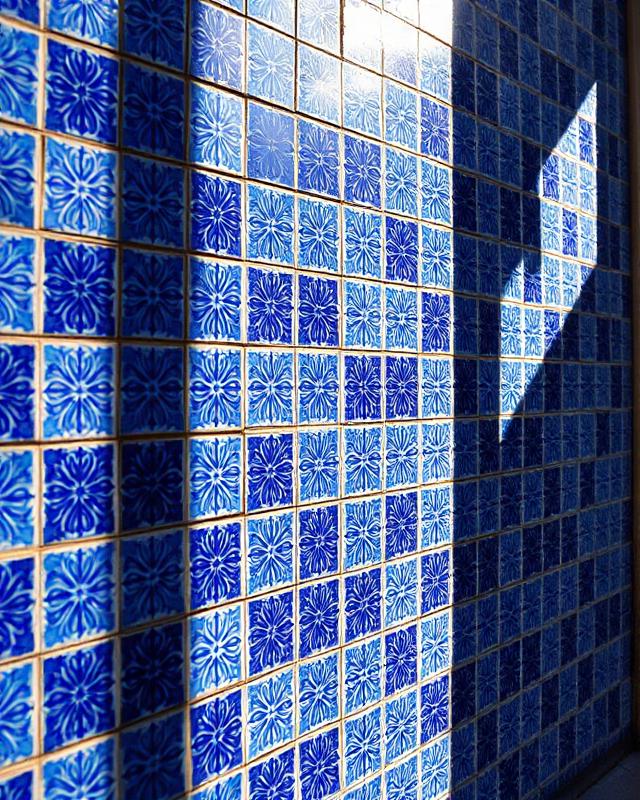
Walk anywhere in Portugal and you'll meet them: glazed ceramic tiles climbing church walls, lining train stations, wrapping entire apartment blocks in shimmering blue. They're called azulejos, and once you start noticing them, you can't stop. Here's what you're actually looking at.
Where the name comes from
Despite the blue, azulejo doesn't come from azul (blue). It traces back to the Arabic az-zulayj — "polished stone." The Moors brought the craft to the Iberian Peninsula, and Portugal adopted it with an enthusiasm that has never faded.
A very short history
Early tiles, from the 1500s, were geometric and multicoloured, influenced by Spanish and Moorish design. The blue-and-white palette that now feels so "Portuguese" arrived later, in the 17th and 18th centuries, inspired partly by imported Chinese porcelain and Dutch Delftware. After the catastrophic 1755 earthquake, tiles became a practical way to clad and protect rebuilt façades — beautiful and waterproof at once.
How to read a tile panel
Grand azulejo panels are often narrative. Look for:
- Religious scenes in churches and monasteries — saints, miracles, biblical stories told across hundreds of tiles.
- Historical and hunting scenes in palaces, showing off wealth and worldliness.
- Decorative borders and repeats on ordinary buildings — the everyday wallpaper of the city.
- Modern works in the Metro and on contemporary façades, proof the tradition is still very much alive.
Where to see the best
- National Tile Museum (Museu Nacional do Azulejo), Lisbon — the definitive collection, set in a former convent, with a 23-metre panorama of pre-earthquake Lisbon.
- São Bento Station, Porto — over 20,000 tiles depicting Portuguese history, possibly the most photographed station in the world.
- Igreja do Carmo, Porto — a vast blue façade you can't miss.
- Lisbon's streets — Alfama, Graça and Príncipe Real, where the best "museum" is simply looking up.
Taking some home (the right way)
You'll see antique tiles for sale — but be careful. Many were stripped illegally from old buildings, and Portugal now protects historic façades by law. Buy from reputable ceramicists and workshops instead; the contemporary work is gorgeous, and you'll be supporting a living craft rather than a vanishing one.